
In 2012, President Barack Obama proclaimed March 29 to be Vietnam Veterans Day.
The date was 47 years after the fighting in LZ X-Ray, and 48 years after Everett Alvarez Jr. became the first American pilot to be shot down and taken prisoner.
The date was 44 years after Marines fought house-to-house in the city of Hue, and far too many years after service members returned home to a nation that was struggling to separate the war from the warrior.
Signed into law by President Donald Trump in 2017, National Vietnam War Veterans Day has been set aside as a day to honor the legacy of the millions who served our nation during the Vietnam war.
The conflict in Vietnam began with Americans advising South Vietnamese troops in combat and soon became a full-fledged war, even though there never was a formal declaration of war. Americans and their allies bravely stood, as their fathers had a generation before, and marched through unbearable heat, torrential rains, and the threat of a well-hidden enemy.
Despite all of these challenges and more, American troops saw consistent military victories throughout the Vietnam War; defeating the Viet Cong during the Tet Offensive, which was the largest offensive to be mounted by the enemy, and continuing to win battles when they were, at times, greatly outnumbered. Service members showed time and time again that they were committed to protecting the liberties and freedoms enjoyed by so many Americans back home.
For the first time in history, Americans were able to watch the fighting from the Vietnam War play out on their television sets, both in Vietnam and on the increasingly violent streets of the United States. Chaos and uncertainty wreaked havoc in America, and yet in Vietnam grunts continued to hump through nightmarish terrain, pilots continued to fly missions, and nurses, doctors, and medics continued to heal young warriors. Service members continued to carry out their orders, showing bravery and resolve whenever the situation called for it.
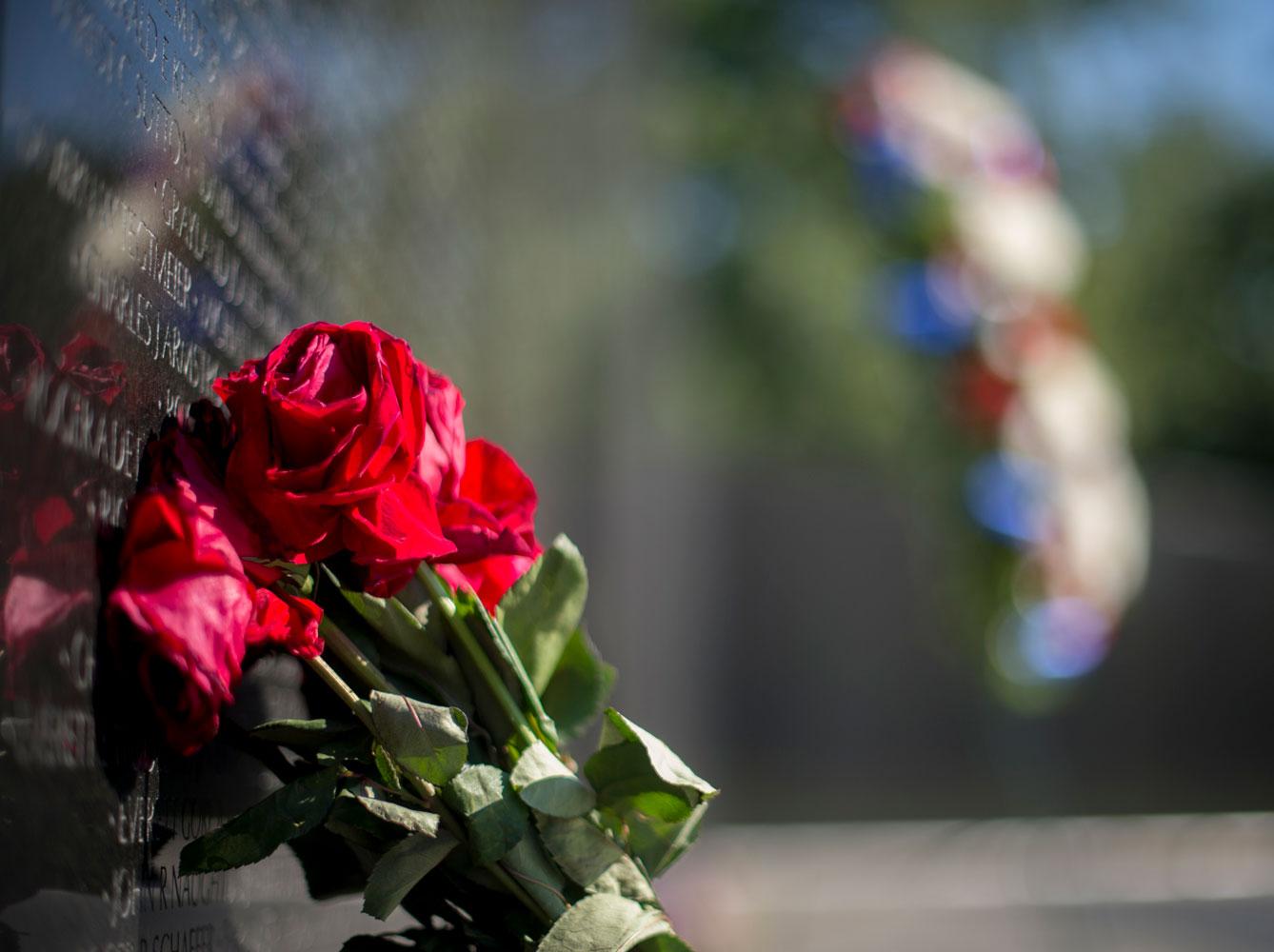
Throughout and after the Vietnam War, thousands of men returned home with physical injuries, and many more later would come to suffer from exposure to Agent Orange and other toxins. More than 58,000 brave heroes paid the ultimate price for our freedoms – their names forever inscribed on the black granite panels of the Vietnam Veterans Memorial.
When Vietnam veterans did return, it was often an unpleasant homecoming. Name calling, leering looks, and frequent mistreatment were part of the experience. The parades of their fathers’ generation seemed a thing of the past.
This experience lit a spark among Vietnam veterans who worked together and made a commitment that the next generation of service members would receive the support and respect they deserved.
When it came time to send our next generation of men and women to war as part of Operation Desert Storm, it was the Vietnam veterans who stepped up to welcome them home; offering salutes, handshakes, and parades for those now returning home from conflict zones.
Vietnam veterans were saying “thank you for your service” and teaching their children, the next generation, to say it too. Through this work Vietnam veterans taught us the right way to treat the men and women in uniform who represent our country.
National Vietnam War Veterans Day is an opportunity for national reconciliation. It offers a chance for a now grateful nation to recognize the fortitude and commitment that Vietnam veterans showed and continue to show every day.
March 29 is an opportunity to thank and honor the 2.7 million service members who served in Vietnam. For Vietnam veterans, this is a day when they finally receive the recognition and respect that was missing so many years ago.
For everyone else, while we cannot go back and fix the mistakes of the past, we can work towards ensuring that all Vietnam veterans receive the welcome home they truly deserve.
Courtesy the Vietnam Veterans Memorial Fund.
Based in Arlington, Virginia, VVMF (the Vietnam Veterans Memorial Fund) is the nonprofit organization authorized by the U.S. Congress in 1980 to build a national memorial dedicated to all who served with the U.S. armed forces in the Vietnam War. Incorporated on April 27, 1979 by a group of veterans led by Jan C. Scruggs, the organization sought a tangible symbol of recognition from the American people for those who served in the war.
The result was the Vietnam Veterans Memorial (commonly referred to as The Wall), which has become one of the most visited memorials in Washington, D.C. with an estimated 5.6 million annual visitors.
Since the dedication of The Wall, VVMF has pursued a mission of preserving the legacy of The Wall, promoting healing and educating about the impact of the Vietnam War.
- Log in or Subscribe to post comments.