
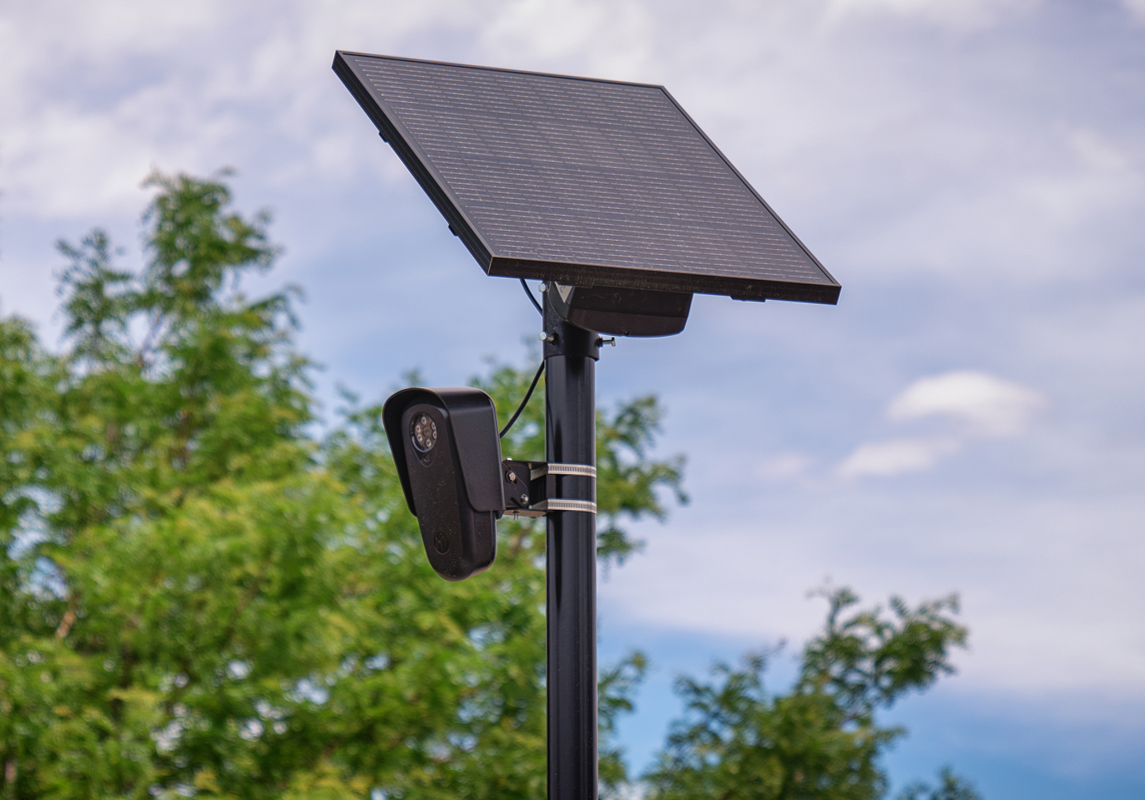
ELLIS COUNTY – “This is an added tool for officers to solve crimes and locate missing and wanted people,” an anonymous local police official said regarding Flock Safety cameras.
“Systems can be abused if we don’t have rules and accountability.”
While rules are needed, questions remain over who sets them.
Residents in Ellis and Dallas Counties are pushing back against oversurveillance. In response, local departments like Midlothian and Waxahachie in Ellis County, alongside Dallas and Addison, established public transparency portals showing camera usage and data-sharing agreements.
The controversy erupted after Governor Greg Abbott ordered state agencies to clarify that state funds cannot buy or maintain Flock Safety cameras.
This directive fundamentally alters how local law enforcement finances automated license plate reader (ALPR) programs.
The freeze stems from a 2023 investigation. The Texas Legislature originally passed a law adding a $1 fee to auto insurance policies to combat catalytic converter theft.
How ever, the Motor Vehicle Crime Prevention Authority funneled $30 million generated by that fee into supercharging the state’s Flock camera network instead.
The MVCPA distributed 95 grants to local police to buy roughly 2,000 cameras, while allocating $15.9 million to the Texas Department of Public Safety for 1,200 more.
In Ellis County, commissioners previously approved expanding these cameras into unincorporated areas, with towns like Red Oak joining Midlothian and Waxahachie in using the tech.
Abbott’s freeze ties directly to privacy concerns and potential Fourth Amendment violations.
At least 13 Flock tracking abuse instances have been cataloged across Texas, resulting in internal investigations, resignations, and felony indictments.
Under the state mandate, cities keeping Flock systems must rely on federal grants or local budgets. Facing constraints, Dallas PD shut off 321 of its 684 cameras and slashed outside access to 202 Texas-based agencies, cutting off federal partners.
However, loopholes remain for Ellis County drivers.
Even when local departments restrict direct access, data can reach federal agencies through interconnected regional networks.
Furthermore, watchdog groups revealed “side door” access where local police manually search the nationwide network on behalf of federal agents for reasons logged as “ICE” or “Border Patrol.”
Ellis County State Representative Brian Harrison (R-Midlothian) has spoken out aggressively.
“It is outrageous that Texans are being taxed out of their homes and forced to fund violations of their own Fourth Amendment rights,” Harrison said.
Harrison noted he voted for the original insurance fee to stop catalytic converter theft but had no idea it would be diverted into warrantless surveillance. He proposed bills in 2023 (HB 3999) and 2025 (HB 961) requiring a warrant for ALPR use and restricting data sharing, but neither passed.
The debate is expanding. U.S. Senator Josh Hawley (R-Mo.) recently launched a federal investigation into AI camera networks like Flock, signaling that local networks face mounting national scrutiny.