
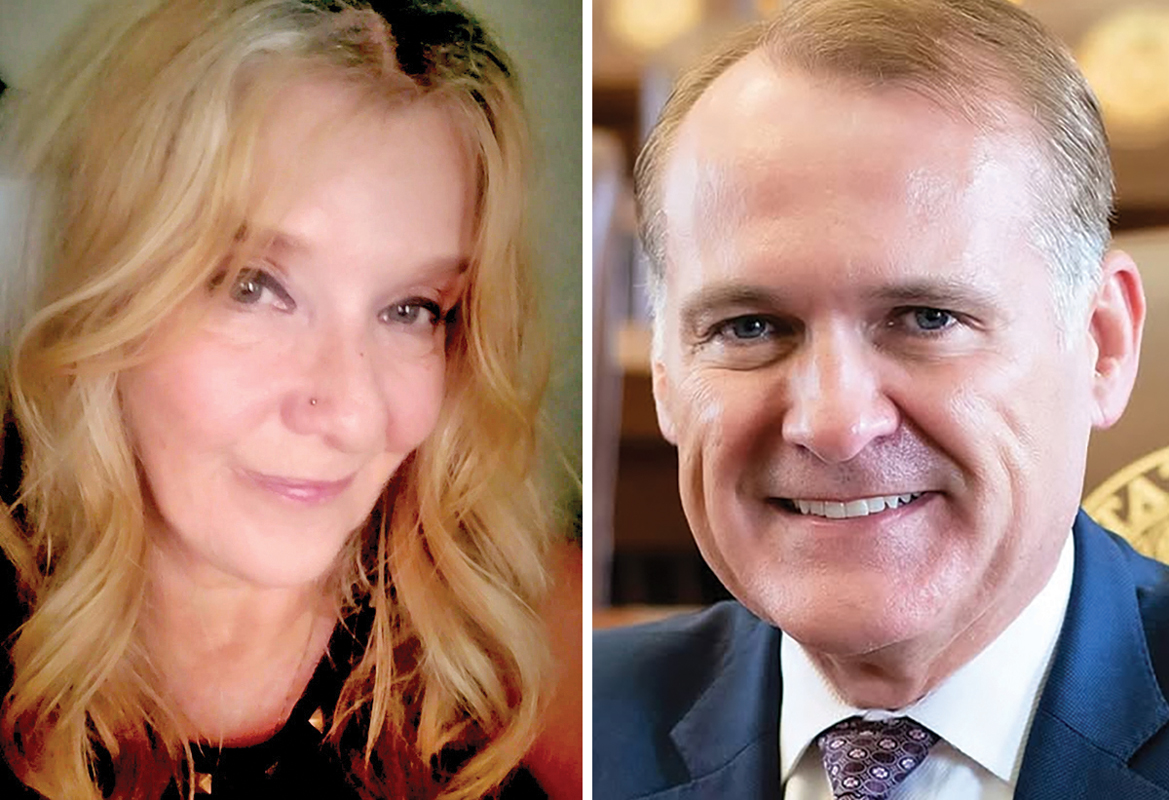
WAXAHACHIE – I recently sat down with Ellis County Judge John Wray to discuss the recently passed country budget, the missing $20M, and what he has done to create some cohesiveness overall.
Ellis County Press: How did the budget questions and missing money begin?
Judge John Wray: I arrived at this job at the beginning of last year’s budget season, and I could tell it was off.
The process was off. It was highly concentrated with one person, and I was having trouble getting good information about the process.
When we adopted the budget, I immediately began raising flags, indicating the need to look at it.
We hired the external auditing firm, and they did a limited examination of a few issues and issued a report, and I have been trying to get things in a better place since then.
ECP: Where do you think the money has gone?
JW: It is too early to tell. Our internal editor looked at actual revenue and what we collected and estimated over the past few years we have collected $8.3M more than we projected in the budgets. That is less than my initial review, but she showed we had about $8M in delinquent tax accounts so collectively that is $16.3M.
I also found the administrative part of the county to be understaffed with people doing too much and exacerbated because we had three major capital improvement construction projects going on too.
I think to the extent we spent more than we thought we were spending it was on those construction projects.
ECP: Why can’t you just determine what was spent versus what was budgeted?
JW: I do not know if anyone has done that and I am still digging into it.
When I look at a budget I begin with a beginning balance, anticipated tax revenues, budgeted expenditures and a projected ending balance.
Our budgets were not handled that way in recent times or perhaps ever.
I think we just got to the end of the year and there was more money than we thought so it was budgeted for the next year. That is a possibility.
ECP: Tell me why you think this happened?
JW: We were very understaffed.
The budget had also become highly concentrated with just one person over the past few years, so we do not have much institutional knowledge.
Now, when that person is gone, we have lost all momentum and knowledge of how the budget has been performing in the last few years.
In the way the budget has been presented in the last few years or more it has not been clear what the beginning and ending fund balances even are for the county or how much money we had in reserve.
That masked some deficit spending over the last several years.
ECP: You inherited this situation so how are you being proactive now?
JW: After the budget last October was complete, I began to look at the situation and immediately implemented a new software program.
That made the process much more transparent.
We are engaging more with the departments that play a part in the budget regarding transparency so now there are more checks and balances.
That was lacking previously. For example, there was a budget specialist position in the auditor’s office that remained unfilled for a couple of years.
That position has been filled and I worked toward implementing a budget office and officer because, as I mentioned, these silos of people, no one is connecting the dots for the benefit of commissioners court.
This office will connect all those dots, and the commissioners will have the information they need to make good budget decisions.
ECP: The new fiscal year budget passed, why did property tax go up but not services for the people?
JW: The rate last year was 0.273992 and the tax rate we just adopted was slightly lower 0.273500 so we did lower the tax rate.
However, the adopted rate is higher than the no new revenue rate and that caused people – along with gaslighting and some getting it wrong when addressing people – to misunderstand.
Here is the thing, our tax revenue from last year to this year will go up about $7M from $106M to $113M and of that $7M about $5.7M is from new improvement added to the tax roll in 2026.
This is due to population growth so year over year our tax revenue increased by $1.3M based on appraisals.
When you put that in perspective it is an overall small percentage of tax revenue increase.
For example, when Brian Harrison was explaining it not long ago, he flat got the tax rate information wrong.
We met the Texas Policy Foundation, the lead Texas conservative think tank, criteria growth in Ellis County.
ECP: What is next?
JW: I hope to have a proposal to bring to the Commissioners Court around October 1 for an audit form.
I do not know the cost because the cost might determine the scope and what we can do.
We want to do it right and we want to draw good conclusions, but we must balance that with the cost, it is budgeted at $300,000 right now.