
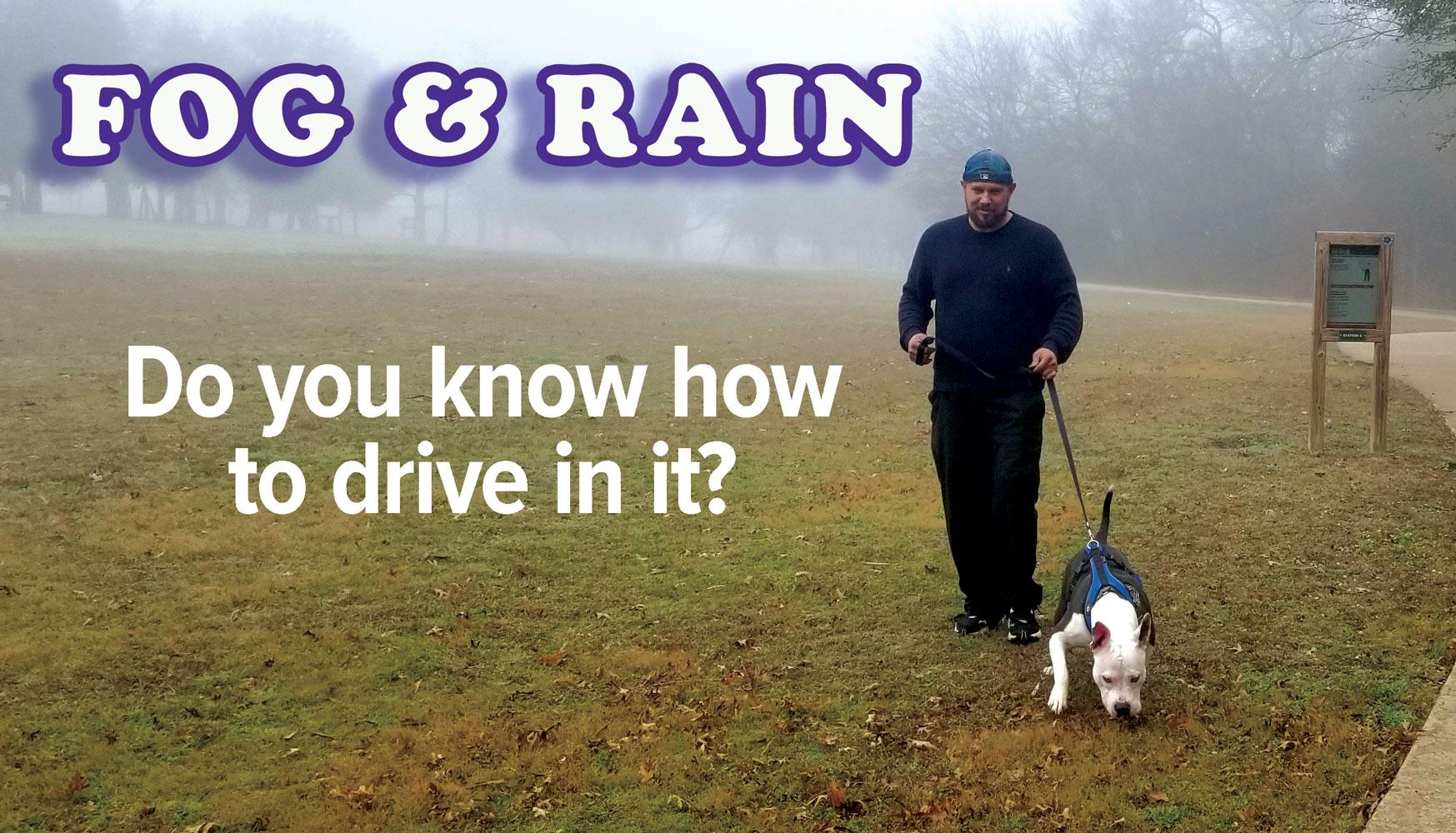
FERRIS – While rain does help plants grow, and it does soak those rain forgotten areas out of drought – it can also be dangerous to drive in if you forget to be careful.
The beginning of the week also saw fog in the morning hours in the area.
In fact, as I went on my usual Monday morning run in Red Oak Park, I jogged into a dense, eerie-like fog, and almost ran straight into several fat squirrels – and a man with his dog out enjoying the morning.
Luckily (for everyone) I wasn’t driving though, because it is not easy to drive in the fog.
Here are some tips from Red Oak Police Department Lieutenant Marc Schroeder to keep you safe on the road this winter.
10 TIPS FOR DRIVING IN FOG
1. Minimize distractions. Silence your cell phone and put it in a place where you won’t be tempted to reach for it while driving.
2. Reduce your speed. If you can’t see the road or other vehicles, a low speed can help you react safely.
3. Use roadside reflectors as a guide.
4. Use windshield wipers and defrosters. This limits excess moisture on the window and reduces glare.
5. Drive with low beams and fog lights.
6. Use the right edge of the road as a guide.
7. Increase your following distance from other cars to ensure you have the proper time to respond to any obstacles. A good rule of thumb is to increase your count distance by at least five seconds instead of the normal two seconds behind another vehicle.
8. Beware of animals on the road. see. The lowered visibil ity in dense fog means less time for you to see an animal and for it to see you.
9. Use your turn signal. Other drivers may be using your taillights as a guide, so alert them that you’re pulling off the road.
10. Turn on your hazard lights only to let other drivers know you’re stopped. Avoid using flashing lights while driving. Using the lights can make other drivers think you’re stopped or stalled.
10 TIPS FOR DRIVING IN THE RAIN
1. Wait until the weather improves if you feel uncomfortable driving in the rain and can’t postpone your trip or commute.
2. Double check your vehicle’s equipment like headlights, tail lights, and windshield wipers to make sure all is working. Also check the tread of your vehicle’s tires since balding tires can severely reduce traction on wet road ways.
3. Slow down. Not only should you adhere to the posted speed limit when driving in wet weather conditions, you should drive considerably slower than you normally would.
4. Turn on your headlights – most states require it.
5. Use your windshield wipers.
6. Maintain a safe distance between cars of several car lengths.
7. Avoid heavy braking.
8. Watch out for standing water. Driving through standing water can cause hydroplaning to occur. To avoid hydro planing, drive around places where water has collected by changing lanes or safely steering around such areas.
9. Let off the gas when hydroplaning and steer in the direction that the front of your car needs to go.
10. Ventilate your car. Rain causes humidity levels to increase and your vehicle’s windows become foggy when you drive and while it is raining.
- Log in or Subscribe to post comments.