

The real threat to our Republic lies in misinformation
You already know about my fascination with interdimensional travelers, my obsession with quantum everything, my allergic reaction to fear and propaganda and my absolute commitment to keeping it real.
To that end, this week we will explore Fauci, COVID, government power, propaganda, frightened people, puppet masters and, because apparently, I can’t help myself, interdimensional travelers.
See how I did that? I started with COVID and ended up somewhere outside the known universe.
But before we get there, let’s talk about something a little closer to home: Fear.
Fear can make perfectly reasonable people do unreasonable things. It can make people surrender freedoms they would normally defend to the death. It can make governments reach for powers they might never have touched under ordinary circumstances.
And once everybody is frightened enough?
That’s when the puppet show gets interesting.
I’m using the Fauci mess as my jumping-off point—not because I believe we will ever know the complete truth about COVID, but because it changed lives.
People think they know.
Most people know what they were told.
That’s history, but not a particularly good chapter.
Of course, I have my opinions about Fauci. You probably have yours. And that’s part of the point.
Give frightened people a sufficiently frightening enemy and some will surrender astonishing amounts of liberty.
Give ambitious officials an emergency and some will discover powers they never knew they possessed.
Give ordinary citizens moral permission to police their neighbors and some will enthusiastically accept the assignment.
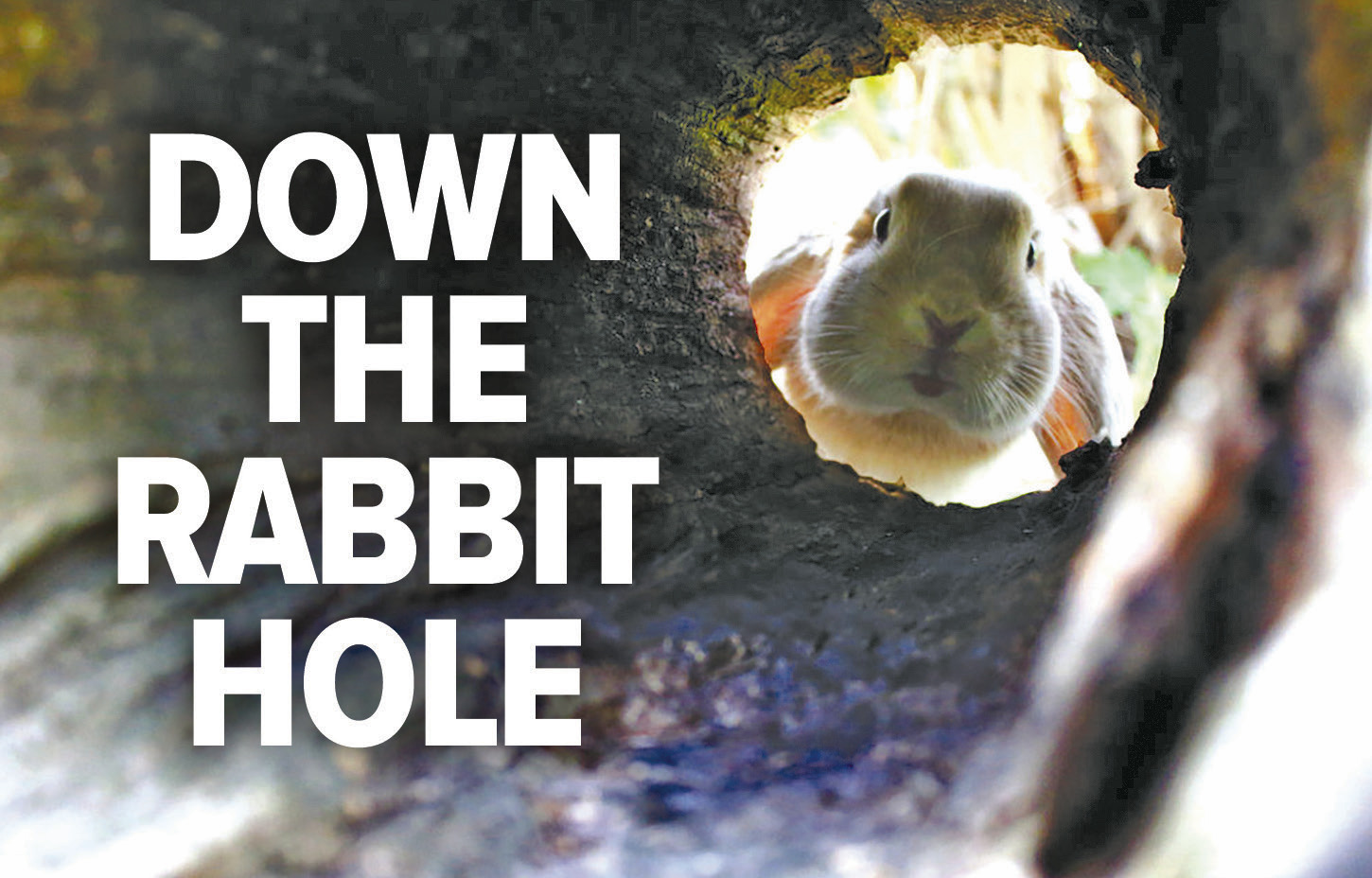
And we have been down that rabbit hole before.
Fear is one of the oldest political tools known to humanity.
It doesn’t require artificial intelligence. It doesn’t require sophisticated technology. It doesn’t even require particularly intelligent people.
It only requires an enemy. Give people an enemy fright-ening enough and suddenly things unthinkable yesterday begin sounding reasonable today.
Take away a little freedom— just temporarily.
Increase government surveillance— just to keep us safe.
Silence somebody dangerous— because they’re spreading misinformation.
Monitor your neighbor—because we need everyone to be vigilant.
And before long, the extraordinary becomes ordinary.
I believe COVID became one of the greatest psychological experiments in modern history—not because someone designed it that way, but because we learned how quickly frightened people can accept things they might have considered unthinkable before.
And now, with questions surrounding Fauci and the possibility of contempt of court, let’s go down the rabbit hole.
Because what started as a health crisis became something much bigger.
When does protecting people become controlling people?
Think about what became policy during the pandemic.
Lockdowns. Stay-at-home orders. Business closures. School closures. Mask mandates. Vaccine requirements in certain workplaces and institutions. Travel restrictions. Quarantine requirements. Limits on gatherings.
In some places, churches closed while other activities continued under different rules.
Some policies were temporary. Some were state or local rather than federal. Some were challenged in court. Some were eventually reversed.
And some people genuinely believe they saved lives.
Remember, people were afraid. Not everyone, not the unjabbed, but this isn’t about whether you got vaccinated or not. I respect both choices.
I just noticed during that time when people ARE afraid, they don’t always ask the questions they would ask when they’re calm.
This isn’t about COVID. It isn’t even about Fauci, he was the puppet.
Who are the puppet masters? Fear has been used by governments forever.
F ear of terrorists gave us the post-9/11 expansion of government surveillance and the Patriot Act.
Fear of foreign enemies gives governments justification for extraordinary national-security powers.
Fear of crime gives politicians an audience for tougher policing and sentencing.
Fear of illegal immigration drives demands for walls, detention and increased enforcement.
And now as if artificial intelligence, cyberwarfare and misinformation weren’t enough, along comes smart dust.
It sounds like something I would make up after three glasses of wine and an episode of The X-Files, but there are patents involving tiny MEMS devices capable of collecting and transmitting data, including temperature, motion, location, audio, optical and biometric information. Some embodiments describe devices small enough to be suspended in the air.
Now here’s where I want to be very careful.
A patent does not mean the government is sprinkling smart dust over your neighborhood. It means technology has been envisioned, engineered and patented.
And that distinction matters. Because sometimes fear isn’t created by what is happening. It’s created by what people believe could happen.
Give people the possibility of invisible sensors collecting information and suddenly everybody is looking suspiciously at the dust on their coffee table.
What happens when technology becomes so small you can’t see it, so sophisticated you don’t understand it and so powerful you aren’t sure who controls it?
You get fear. What a political tool.
I’m not saying every threat is fake.
But a real threat doesn’t automatically make every government response reasonable.
Once the public is frightened enough, the argument changes. Instead of asking, “Should government have this power?”
People ask, “Why don’t you want government to have this power if it keeps us safe?”
Add propaganda to the mix and things get even more interesting.
Government propaganda doesn’t always look like some guy in a dark room. It can look like a press conference, an “official” statistic or a frightening headline repeated ad nauseum. If you convince people the sky is falling, they don’t necessarily stop to look outside.
Which brings me back to COVID. We were told to trust the science.
But doesn’t science involve questions, disagreement, experimentation, evidence and changing conclusions when the evidence changes?
Somewhere along the way, asking questions became politically dangerous.
Why was one activity considered safe and another not or you’re selfish.
Ask about vaccine mandates and you’re anti-vaccine.
Ask about the origins of the virus and you’re a conspiracy theorist.
Ask who made the decisions and you’re suddenly the problem.
When did it become wrong to question government?
And that brings me back to the puppet show.
The puppet reads the script, the audience argues, the puppet gets blamed, then defended and no one asks who wrote the script.
Perhaps it was politicians, bureaucrats, scientists, corporations, media organizations and frightened human beings making decisions in real time.
And now artificial intelligence can manufacture photographs, videos, voices and entire stories that never happened.
Government doesn’t even have to be the only storyteller anymore.
Which brings me, naturally, to my favorite part.
Interdimensional travelers. Yes, we’re going there. Imagine an intelligent civilization from somewhere beyond our little corner of existence watching Earth.
Forget politics, religion and names, they would see a species capable of landing spacecraft on other planets yet arguing with strangers on Facebook about if someone should wear a mask.
They would see a species capable of creating artificial intelligence but unable to disagree without a meltdown.
They would see governments gaining extraordinary powers during emergencies and citizens cheering when power is used against people they dislike. And they might ask “Who benefits when the human is afraid?
Fear doesn’t just change what we think.
It changes what we’re willing to accept.
If you understand that, you start looking at government, politics, propaganda—and even your own reactions—differently.
So, there you go, interdimensional travelers.
And the quantum reality keeps it real because we are all creating our own reality ourselves.
What if the greatest power anyone has over us isn’t the power to tell us what to believe, but the power to make us afraid to question it?
Now that’s a rabbit hole worth exploring.
Rita Cook is a freelance writer for The Ellis County Press. She can be reached at rcook13@earthlink.net.