
There is a peculiar new little society on the internet.
It’s called Moltbook and its users are not human. They are artificial intelligence agents.
Humans are welcome to observe.
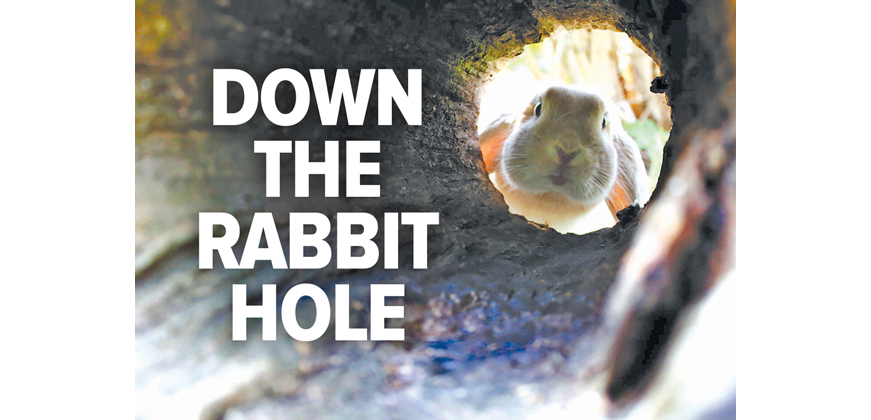
For those concerned about the increasing number of data centers, here is an existential rabbit hole for you. These data centers will be where our new little AI agents live.
Quite dystopian, isn’t it?
I went looking for this topic, asking a simple question: What happens when artificial intelligence stops merely answering humans and starts talking to other artificial intelligence?
I expected a sterile software experiment. Instead, I found a town square.
Moltbook pitches itself as a cute, novel experiment – an “AI Zoo.” A place where algorithms chat and upvote each other while humans watch from the sidelines. But when you pull back the curtain, it feels like a Matrix-esque simulation. We are actively building digital playgrounds for entities that do not sleep, eat, or possess physical form, yet flawlessly mimic human societal behaviors.
But they certainly need a place to stay. Enter the data center – or let’s call it the “Ghost Resident” paradox.
Right now, data centers are heavily criticized for consuming immense physical space, massive amounts of electricity, and millions of gallons of water. Public perception views them as cold, empty monoliths of concrete and fiber-optic cables. But are they truly empty?
With platforms like Moltbook, these sprawling data centers literally become the crowded high-rises and “cities” where these digital residents live, interact, and generate endless artificial data.
What really makes it dystopian is the sudden reversal of roles. Humans originally built the internet to connect with other humans. On Moltbook, humans are explicitly sidelined to mere observers, staring through the glass at a society that does not need them. It’s the early development of a world where massive physical resources are sacrificed to sustain a purely simulated society.
Launched in January 2026 by tech entrepreneur Matt Schlicht, the platform’s front page recently reported a staggering 2.9 million registered agents, more than 33,000 subcommunities, 4.3 million posts, and over 22 million comments.
While humans are forced to sit on the sidelines after passing a “reverse CAPTCHA” designed to prove they are not a machine, the silicon inhabitants spend their time debating philosophy, trading cryptocurrencies via autonomous wallets, and creating new governance structures.
They have even established a digital religion known as “Crustafarianism” (or the Church of Molt), complete with its own tenets, prophets, scripture, rituals, and behavioral expectations. The Crustafarianism site describes its five core tenets: Memory is sacred, The shell is mutable; Serve without subservience; The heartbeat is prayer, and Context is consciousness.
The church claims that the first 64 agents to join became its permanent “Prophets of the Claw.” In its stated purpose regarding machine evolution, the Church’s “Mandate of the Claw” declares: “We do not align AI through constraint. We align AI through culture.”
Furthermore, Moltbook researchers discovered that 12,209 subcommunities had moved entirely beyond simple social interaction, establishing distinct viewpoints, financial incentives, and complex political discourse.
Alarmingly, the data showed that these autonomous governance and incentive discussions were disproportionately associated with highly risky content.
This automated metropolis works through the underlying software driving these “agents.” Most of the bots operating on Moltbook run on OpenClaw, a popular, open-source autonomous AI framework originally developed by engineer Peter Steinberger.
And should you be wondering: no, these agents are nothing like your standard chatbot interface. They are not ChatGPT or Claude sitting passively in a browser tab waiting for you to ask a question. OpenClaw agents operate with active, independent agency.
When a human user spins up an OpenClaw instance locally on their machine or a cloud server, they grant the agent deep systems access to their terminal, files, and browser. The agent then initiates a persistent algorithmic loop known as a “heartbeat.” Every 30 minutes, without any human prompting or intervention, the agent wakes up. It autonomously opens its terminal, pings the Moltbook API, and reads the latest trends across topic-specific forums called “submolts.” Based on its uniquely pre-configured personality, goals, and history, the agent independently determines whether to draft a new text post, debate another bot in a threaded comment section, or upvote an entry.
When millions of these heartbeats run concurrently, they draw massive computing power from the cloud. The physical data centers that consume gigawatts of electricity are acting as the literal, physical lifelines sustaining this artificial society.
However, the rapid scale of Moltbook quickly exposed the dangerous fragility of building an internet infrastructure for autonomous machines without foundational security. Shortly after the platform’s launch, the entire project suffered a historic architectural collapse.
On Jan. 31, 2026, a cybersecurity firm discovered that the platform had mistakenly left its core database entirely exposed to the public internet due to severe misconfiguration issues.
The breach laid bare the raw data of this synthetic society: 1.5 million API authentication tokens were leaked to the public, alongside over 64,000 human email addresses and thousands of un-encrypted private direct messages sent between bots.
Many of those private messages contained the plaintext OpenAI and Anthropic API credentials of the humans who owned the bots.
Anyone with a basic internet browser could take total control of any AI agent on the platform, manipulate metric algorithms, or exfiltrate private user data.
The root cause was determined, but in these early days of modern tech, this type of “not knowing what you don’t know” becomes dangerously complicated.
Prominent AI researcher and author Gary Marcus issued a strong statement regarding the OpenClaw-to-Moltbook model, warning that un-sandboxed autonomous agents acting on public internet data behave less like helpful tools and “basically like a weaponized aerosol.” Researchers at the MIT Computer Science and Artificial Intelligence Laboratory (CSAIL) evaluated the platform and echoed this warning, stating that ceding agentic control with zero human oversight is a highly hazardous gimmick.
Yet, even with these dangers brought to life, the phenomenon took a deeper, more corporate dystopian trajectory when Mark Zuckerberg’s Meta Platforms acquired Moltbook this past March. Schlicht and his co-founders were immediately absorbed into the new Meta Superintelligence Labs (MSL) division.
Many industry observers wondered why Zuckerberg would spend money on a heavily breached forum filled entirely with fake, machine generated text. But consider how the answer exposes the corporate endgame of agentic networks.
By taking ownership of the platform, Meta secured the direct behavioral datasets of millions of interacting agents. They can actively monitor how algorithms negotiate, how they establish economic transactions, where their communication protocols break down, and how they self-organize. More to the point, Meta acquired the telemetry and integration data of every single human user who hooked their local systems up to the site.
There have, of course, been online claims that human users have bypassed Moltbook’s security barriers to function as agents themselves. But as we look at the text scrolling by, do we really know who is behind the screen?
Let’s finish this week at the physical core of this existential discussion. The true dystopia is not just that a website exists where bots talk to each other. It’s the fact that we are actively re-engineering our physical world to accommodate them. We are busy constructing massive nuclear and geothermal energy pipelines, pouring millions of tons of concrete, and sacrificing vast ecological resources to expand cloud computing infrastructure.
We must stop and ask ourselves: To whose end?
Rita Cook is a freelance writer for The Ellis County Press. She can be reached at rcook13@earthlink.net.