
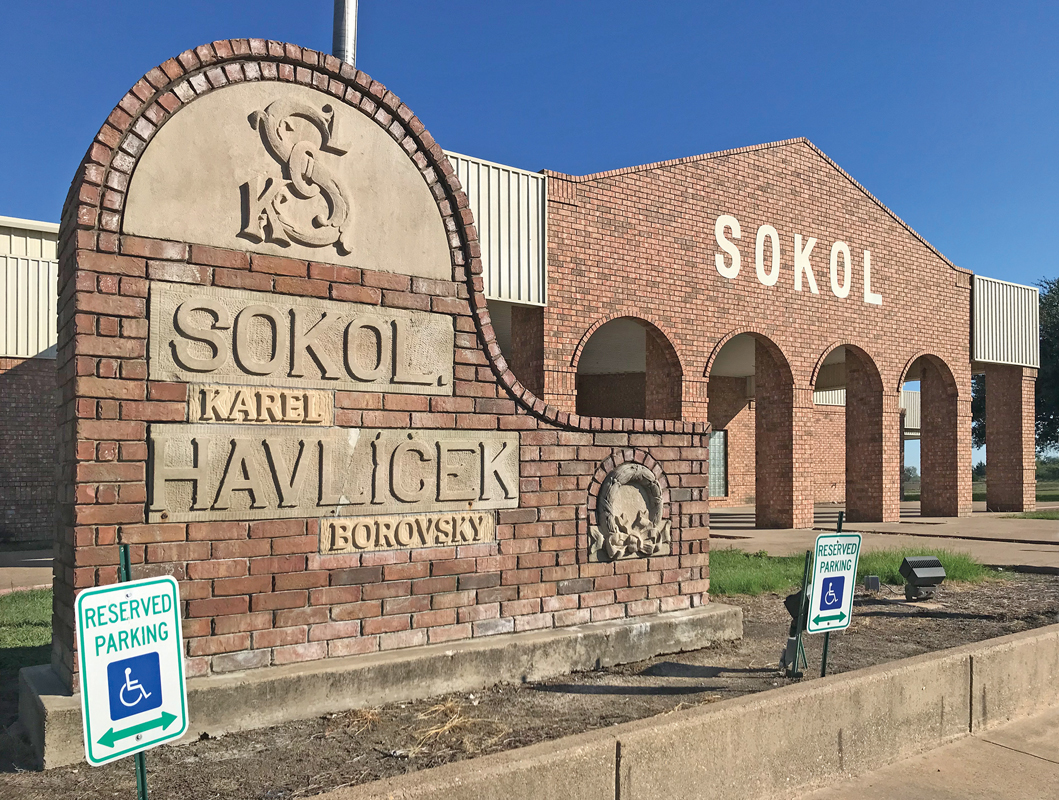
ENNIS – The Texas Historical Commission has recognized Sokol Karel Havlíček Borovský of Ennis as a significant part of Texas history by awarding it an official Texas Historical Marker.
The designation honors the Ennis Sokol as an important and educational part of local history as it was the first unit established in Texas in 1908.
A dedication ceremony to commemorate the event is planned for Saturday, May 9 at 2 p.m. with a reception at the Sokol Activity Center, 2622 East Highway 34, Ennis.
A brief history of Sokol Karel Havlíček Borovský and its role in preserving the local Czech cultural heritage will be presented.
The first Czech families to arrive in the Ennis area came in 1875, with a large influx of immigrants from Moravia and Bohemia in the mid-1880s.
Cultural organizations were vital to the Czech community, not only helping their neighbors in times of need, but also embracing traditional wedding ceremonies, food, music, dance, and costumes.
A physical, educational, and cultural organization, Sokol is the only Czech related organization formed in the United States that had its beginning in the old country.
Sokol Ennis KHB is the oldest continuously active Sokol in the state of Texas. Sokol KHB is also recognized as the first and oldest gymnastics club in the state.
The Ellis County Historical Commission invites the public to share in this exciting historical event and enjoy the Czech Museum and Library located in the Sokol Activity Center.
The State of Texas has the largest marker program in the United States with approximately 16,000 markers, and Ellis County is home to 132.
The Sokol Karel Havlíček Borovský marker can be viewed on location in front of the Sokol Activity Center in Ennis following the ceremony.
A subject qualifies for a marker based on two criteria historical significance and age.
Historical significance is established by reviewing its role and importance in local history and the age requirement depends on the topic. THC’s official Texas Marker policies are outlined in Official Texas Historical Marker Procedures on the Texas Historical Commission website.