
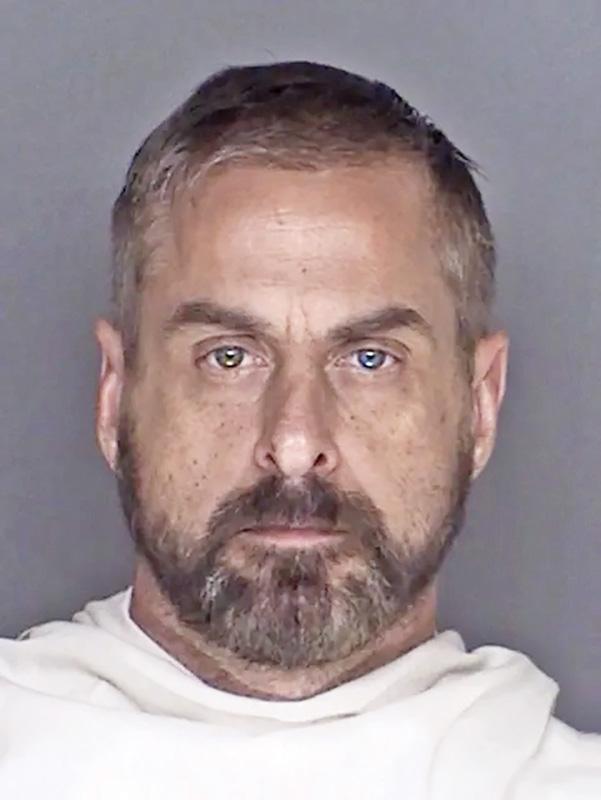
WAXAHACHIE - Guy Wayne Lynch, 52, of Aubrey, was convicted of murder by a jury and sentenced to 75 years in prison in the Texas Department of Criminal Justice in a statement released by Ellis County and District Attorney Ann Montgomery.
During the trial, an Ellis County jury learned that on July 15, 2017, hog trappers discovered skeletal human remains in a rural area outside of Alma.
For the next month, Ellis County Sheriff Office investigators worked to determine the identity of the human remains.
During the same period of time, family members for Tia Spearman, a 21-year-old woman originally from Lawton, Okla., reported her missing.
The family had not heard from Spearman since June 11, 2017. Family members believed she was living in North Texas when they lost contact with her.
With the help of forensic anthropologists and scientists from the University of North Texas Center for Human Identification, investigators were able to positively identify the human remains as Spearman on Aug. 15, 2017.
Forensic anthropologist Dr. H. Gill-King determined she had been shot in the head twice, likely from a barrel of a firearm contacting her head, and that the manner of her death was homicide.
During the trial, the jury heard Spearman dated and had been living with Lynch in Aubrey, Denton County, when she went missing.
When investigators went to speak to Lynch at his apartment, they discovered both Lynch’s adult son and juvenile son had lived in the apartment with Spearman and Lynch.
Both sons agreed to speak to investigators.
Lynch’s adult son testified in court and explained to the jury sometime in the middle of June 2017, he noticed Spearman was not at the apartment anymore.
When he asked his father, Guy Lynch, where she had gone, Lynch said he killed her the previous day by shooting her in the head.
The son testified Lynch said he and Spearman had been arguing, and at some point Lynch felt Spearman had changed personalities – and felt threatened by her.
Lynch then shot and killed Spearman.
The next day following their conversation, Lynch drove and stopped on a bridge over a body of water and threw the murder weapon into the water.
Since the manner of death had not been previously released to the public at the time of the interview with Lynch’s son, investigators felt that the son’s information was important and likely credible.
After securing several search warrants for Lynch’s apartment, truck, and cell phone records, the jury learned that the inside of the truck was covered in bodily fluid.
Forensic scientists conducted DNA analysis and the bodily fluid came back as human blood belonging to Spearman. Lynch’s cell phone records also showed that he and Spearman exchanged about 3000 text and phone calls between Jan. 1, 2017, and June 15, 2017.
Those calls and texts stopped abruptly on June 15, 2017.
Almost all of the phone calls connected to cell phone tower locations around Pilot Point and Aubrey in Denton County, except for one.
On June 15, 2017, Lynch’s phone connected to a tower located about two and a half miles from the location of Spearman’s remains in Ellis County.
Both the evidence in the truck and from the cell phone records strongly corroborated the son’s testimony.
The jury learned Lynch had spent more than 20 years in the United States Army, and owned and had access to several firearms at the time of the murder.
The jury also heard the evidence that led investigators to exclude both sons as possible suspects.
Lynch testified in trial and explained at the time of Spearman’s life, he was living a “life of sin.” He was sexually promiscuous, and he was selling marijuana illegally. Evidence also showed Lynch was a president of a criminal motorcycle gang several years before the murder.
He believed he started seeing demons in June 2017, and thought a demon had possessed his body as well as Spearman’s body.
Lynch explained he was driving on Interstate 45 with Spearman when the demons appeared. He was frightened, pulled out gun from his waistband, and fired one shot into Spearman’s head.
He continued to be scared, exited the highway, and drove a distance to get Spearman’s body and any demons out of the truck. While Spearman lay on the ground, he fired the gun again into her head, got back in the truck and drove away.
Lynch explained he kept seeing demons during the next few days and had made a decision to kill himself. However, he had an awakening, accepted Christ into his heart, and was now on the right path.
Lynch continued to deny he murdered Spearman, and claimed unknown forces caused him to pull the trigger. Though he claimed he had been changed by his acceptance of Christianity, Lynch never made any attempt to contact Spearman’s family or the police regarding the location of her body for the two months after the murder.
He also threw away Spearman’s clothing and cell phone, shredded important documents such as her social security card, changed his phone number, threw away the phone he had at the time of the murder, attempted to clean all the blood out of his truck, and coached his son regarding what to say to the police if officers ever questioned the son about Lynch’s involvement in Spearman’s death.
The jury returned a verdict of guilty for the murder of Spearman and sentenced Lynch to 75 years in prison.
Murder is a first-degree felony with a range of punishment of 5-99 years or life in prison. Lynch will not be eligible for parole until he has served 30 years of his sentence.
The almost five-year delay from the date of offense to the date of trial was due primarily to the covid pandemic interruption of the judicial system in the State of Texas.
Montgomery said, “The pandemic could not delay justice indefinitely. Ellis County citizens have confirmed again, today, that the violent exploitation of the defenseless will not be tolerated here.”
Judge Cindy Ermatinger of the 443rd District Court, presided over the case.
Assistant County and District Attorneys Cynthia Walker and Grace Pandithurai prosecuted the case, assisted by County and District Attorney Chief Investigator Bryan Norris and Investigator Todd Woodruff, and lead felony clerk Karen Hendricks – as well as many other prosecutors and investigators.
The case was investigated by lead investigator Sgt. Richard Hundley, and investigators Lt. Shane Thompson and Sgt. Joe Fitzgerald of the Ellis County Sheriff’s Office.
- Log in or Subscribe to post comments.