
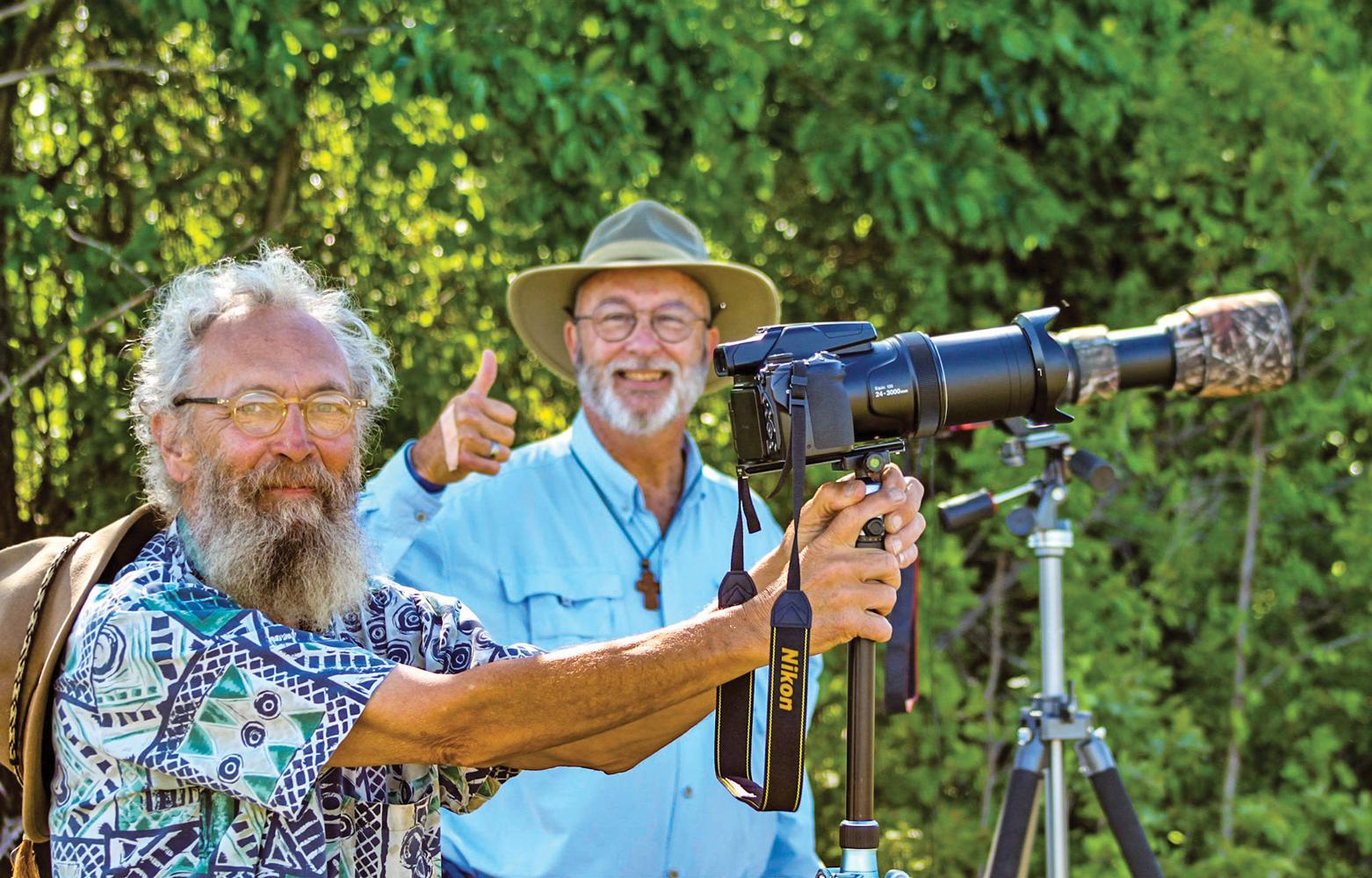
My name is Robert Jones, and the year 2020 will probably go down in history for many reasons.
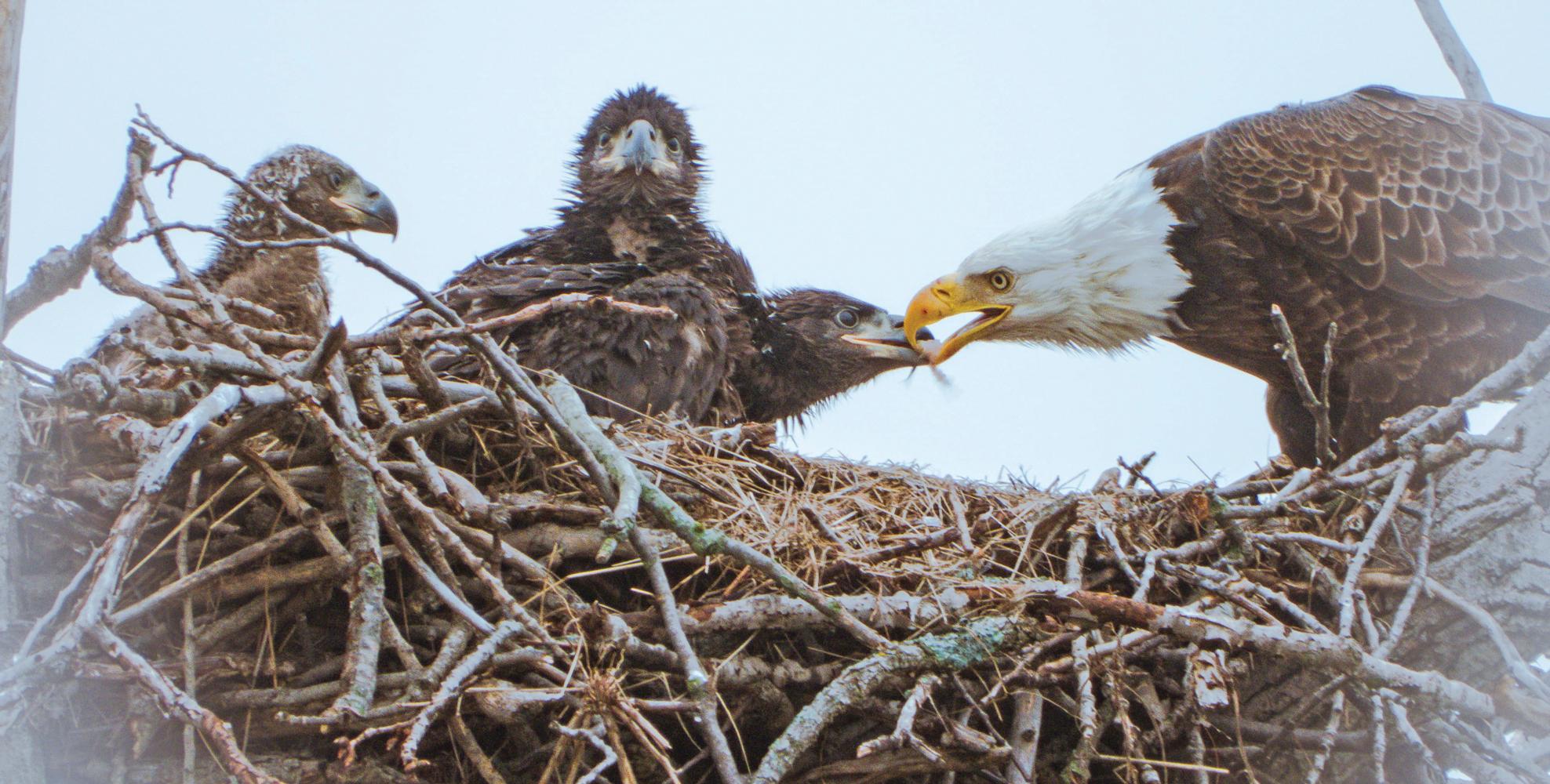
For me, the year 2020 will be the year that a pair of American Bald Eagles had a brood of triplets.
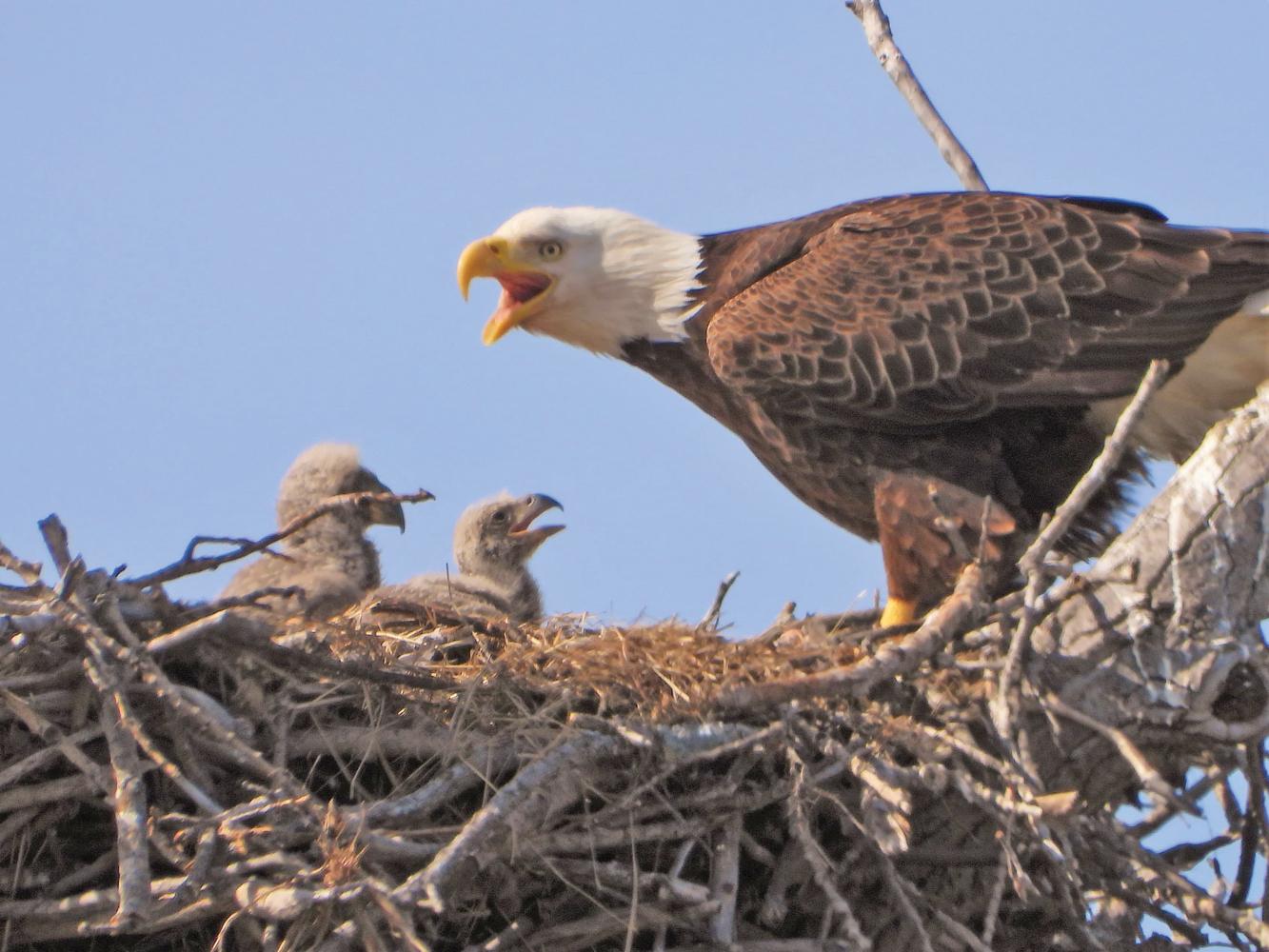
The Audubon Society states two to three eggs are laid each breeding season.
However, through my observations from as far north as Alaska, to the state of Maine and south to Texas, I have only witnessed, two eaglets at a nest.
In my opinion, being able to witness three eaglets surviving to have a solo flight is an extraordinary experience.
It has been three consecutive years of observations, at this site on the western shore of the Preston Peninsula, Lake Texoma, Pottsboro, Texas; during these observations the same pair of eagles have occupied this nest each November to December period, which starts a new breeding season.
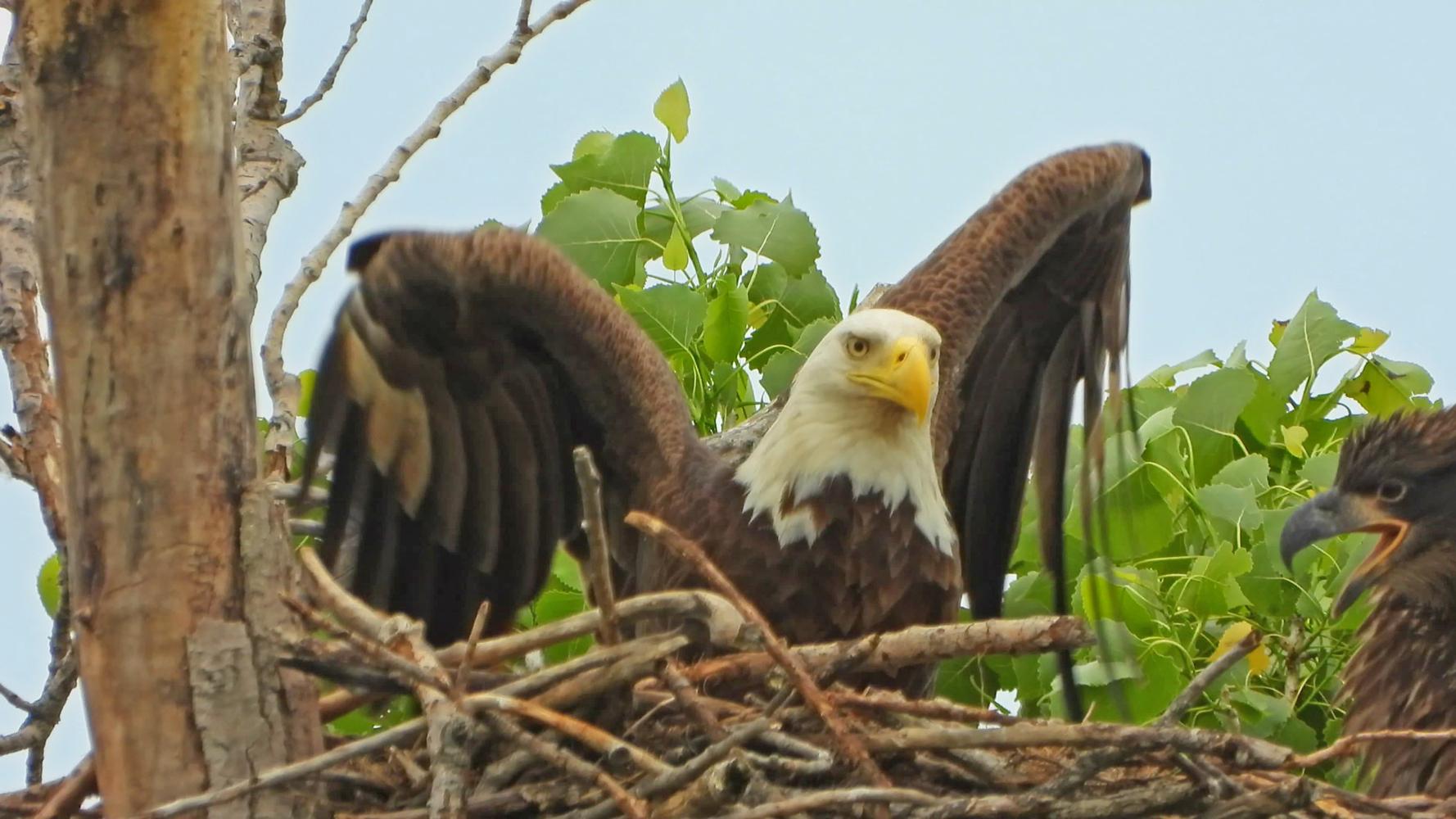
The adult eagles nicknamed “George and Gracie” have their own distinct features.
Gracie is larger, and has a black spot on the lower portion of her iris on her right eye.
George has the distinct feature of white feathers that edge his collar are not an even pattern. They are extremely zig-zagged in the front.
Come January of each year, here at Lake Texoma, additional grooming and remodeling of this multi-generational nest indicates a new brood will begin.
It is written, 35 to 40 days after the clutch of eggs are laid, hatching starts the chick’s new life.
I have read, the average weight of a Bald Eagle’s egg is approximately 4 oz. and 3 inches long by 2 inches wide.
The eaglets will have grown to 30 to 32 inches tall and weigh, 7 to 10 lbs. 70 to 84 days after they hatch.
Mature females are larger than the males and can weigh up to 14 lbs.
Mid-February was my first sighting of the 2020 eaglets.
On Feb. 29, “leap year” day, I was able to photograph the eaglets, and start two daily observations of their progress.
I would post my images to family, friends, and Texas bird groups. I would reply to any comments or answer questions of my findings about these eagles, our “national symbol.”
At the end of April, I received a request from Michael Dikovitsky, a National Geographic advocate and photographer, for a guided tour of the location where the Bald Eagle triplets were.
We set a date of May 1 to jointly go on an “eagle safari” and capture some images of this regal family.
I agreed to the request, because I was glad to find others interested in observing and documenting this event as I was.
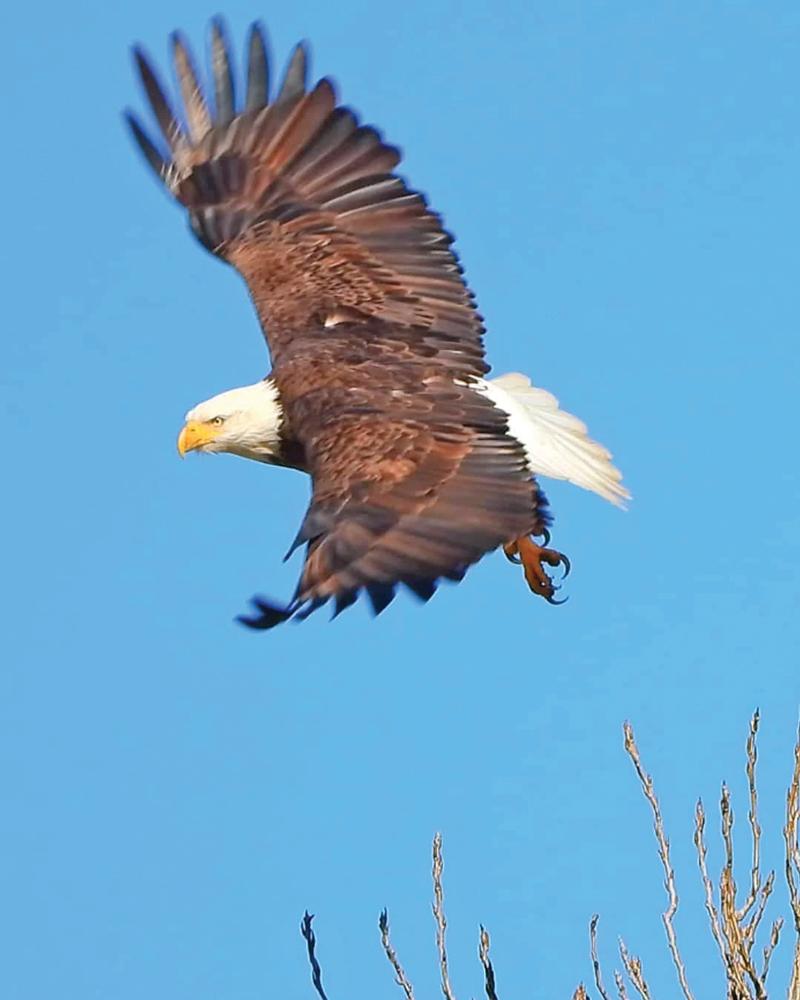
Michael and I captured the first flight of the “alpha” eaglet, lasting approximately one minute – who then returned to a precarious landing at the nest.
I was elated that another photographer witnessed this primary event along with myself.
Michael and I did a second tour on May 5 and observed the second eaglet take his initial flight.
The next day, May 6, I did another tour with Basu Bhaumik from Dallas and was able to photograph the solo flight of the third eaglet.
Now that all three eaglets have accomplished their solo flights, the familiarity of the nest will fade, and the rest of their future will be out at remote locations from where they were newborns.
Here in the prairie lands of Texas, in the Red River Valley region, there is an abundant amount of wildlife to see and experience. Texas is a migratory stop for many species of birds.
This great state has an extremely large variety of wildlife; birds, deer, bobcats, coyotes, turtles, fish, lizards, prairie dogs, flora, insects, mushrooms, and cactus; no matter your outdoor interest, Texas has what you’re looking for.
You can always begin an adventure, with a “backyard safari.”
- Log in or Subscribe to post comments.