
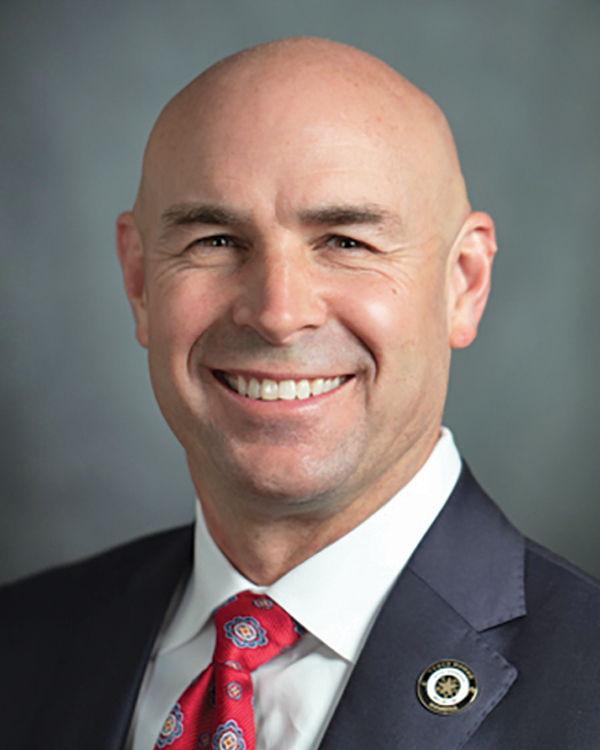
ELLIS COUNTY – It was a comment at the Ellis County Conservatives Facebook page that sparked discussion alleging U.S. 6th Congressional District Representative Jake Ellzey had, “Once again” betrayed the American people.
“We have got to vote this liberal out of office,” one persona added.
Ellzey is running for re-election in March, and has sparked anger among constituents during his term voting on items that one resident said, “Is not in line with why we sent him there to be our voice.”
This latest bill, H.R. 7148 (the Consolidated Appropriations Act, 2026), was another example.
The bill, signed into law on Feb. 3, provides full-year funding for federal agencies including DHS (FEMA, TSA, CISA) with key provisions including pharmacy benefit manager reforms with 100% rebate pass-through, new ERISA transparency rules, and a healthcare extender.
The aspect of H.R. 7148 Ellis County residents are angry about is the significant funding for refugee assistance.
The total amount of the final bill provides $5.1 billion for the Refugee and Entrant Assistance program.
The bill passed after a high-profile attempt to eliminate its funding was defeated in the Senate.
Republican Senators Rand Paul from Kentucky and Mike Lee from Utah voiced strong opposition to refugee funding, and Paul introduced an amendment to cancel approximately $5.1 billion for refugee and entrant assistance funding.
Texas Senators Ted Cruz and John Cornyn voted alongside Paul, but the vote was 32-67 rejecting it, thereby ensuring the funding remained in the final bill signed by the President.
When Congress voted on the final H.R. 7148, it passed with Ellzey voting in favor.
The Refugee and Entrant Assistance law will continue to fund REA programs, which provide medical, employment, childcare, and cash assistance to eligible refugees.
The International Refugee Assistance bill also includes $5.5 billion for humanitarian assistance, which merges several accounts including Migration and Refugee Assistance into a new consolidated account.
Other specific programs ultimately at the cost of the taxpayer designates $8 million for programs to promote Tibetan culture in refugee and diaspora communities and $5 million to strengthen the Central Tibetan Administration.